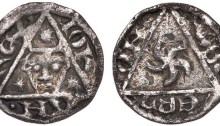
Ireland. John as lord of Ireland (1177-1199), AR Half-penny. Dublin, c. 1190-1198. +IOHANNES DO, facing diademed head / +TOMAS…VVE, voided cross potent. SCBI 10, Belfast, 231-74; S 6205. 0.71g, 14mm, 6h.

Irish Coin Daily: Prince John’s Silver Halfpenny (Second Coinage, Dublin Mint / Tomas)

Date: c. 1190-1199 Description: Ireland. John as Lord of Ireland (1177-1199), silver halfpenny. Halfpenny, second coinage (1190-99), Dublin mint, c. 1190-1199. SCBI 10, Belfast, 231-74; S 6205. 0.71g, 14mm, 6h. Very Fine (VF) Obverse: Facing diademed head, legend around +IOHANNES DO Translates as “John Dominus” Reverse: Voided cross potent, legend around +TOMAS…VVE Translates as “Tomas of…
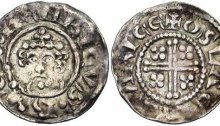
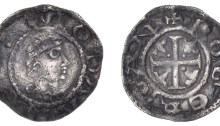
Henry II of England, Short Cross Class 1B Penny, Moneyer Oslac of Worcester

O’Brien Coin Guide: Why did Henry II not issue coins for Ireland?

Background Henry’s Troubled Succession Henry was born in France at Le Mans on 5 March 1133 as the eldest child of Geoffrey the Fair, Count of Anjou, and the Empress Matilda, so titled because of her first marriage to Henry V, the Holy Roman Emperor. Henry’s mother was a very powerful woman: She was the…

How hammered coins were made in medieval times (a video blog)

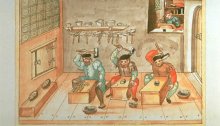
One of the most asked questions relating to hammered coins is “how are they made?” Rather than go into a long speech about how it was done, perhaps it is best if I leave this to the experts …. Dave Greenhalgh (Cosmeston Medieval Village) & Barrie Cook (Curator of Medieval Coins, British Museum) Dave reckons…

King John Irish farthing, Dublin mint

Collecting medieval Irish coins

One of the more difficult aspects of coin collecting is the language barrier one encounters when trying to decipher the legends (text around the edges) of coins. Very few of us speak Latin and truncated Latin still appears on British coins today. As we all know, British coins circulated alongside Irish coins in this country…