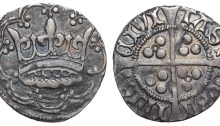
IRELAND. Edward IV. First reign, 1461-1470. AR Groat (26mm, 2.40 g, 1h). Heavy ‘Cross and Pellets’ coinage. Dublin mint; im: pierced cross fitchy. Struck 1465. + ЄDWΛRDVS : DЄI : GRΛ : DnS : ҺУBЄRnIЄ (double saltire stops), crowned facing bust within tressure of arches, with inward facing lis on cusps, pellets in three lower spandrels / + POSVI [DЄV]m : Λ DIVTOR • Є mЄVm/ CIVI TΛS DVBL InIЄ (pellet and double saltire stops), long cross pattée with trefoils in angles, additional pellets in second and third angles. SCBI 22 (Copenhagen), –; D&F 133; SCBC 6291. VF, toned, edge splits.

Irish Coin Daily: Silver Groat of Edward IV, Heavy Portrait ‘Cross & Pellets’ coinage (Dublin mint) 1465-66

Date: c. 1465-66 Description: Edward IV. First reign, 1461-1470. Silver Groat (26mm, 2.40 g, 1h). Heavy Portrait ‘Cross and Pellets’ coinage. Dublin mint; im: pierced cross fitchy. SCBI 22 (Copenhagen), –; D&F 133; SCBC 6291. Very Fine (VF) Toned, edge splits Obverse: Crowned facing bust within tressure of arches, with inward facing lis on cusps, pellets in three…

Ireland. Henry VII (1485-1509) AR Groat. Dublin, c.1485-1487. [RЄX] ΛnGL IЄ FRΛ nC[IЄ], coat of arms over long cross with triple pellet ends / [DOmI] nVS hУBЄ RnIЄ, three crowns over long cross with triple pellet ends. S 6415. 1.92g, 22mm, 11h. Good Very Fine. Of exceptional quality and visual appeal.

Irish Coin Daily: Silver Groat of Henry VII (1485-1509), Dublin Mint

Date: c. 1485-1487 Description: Henry VII Silver Groat. Dublin mint, c.1485-1487. [RЄX] ΛnGL IЄ FRΛ nC[IЄ], coat of arms over long cross with triple pellet ends / [DOmI] nVS hУBЄ RnIЄ, three crowns over long cross with triple pellet ends. S 6415. 1.92g, 22mm, 11h. Good Very Fine (gVF) Of exceptional quality and visual appeal. Country: Ireland…

Irish Coin Daily: Silver Groat of Edward IV (1461-1483)

Date: c. 1460-1463 Description: Edward IV Silver Groat. Dublin mint, c.1460-1463. Large crown within tressure of nine arches, each arch ending in triple pellets / CIVI TΛS DVBL InIЄ (double saltire stops) large cross pattée; triple pellets in quarters; central annulet in second and third quarters. S 6272. 2.44g, 23mm, 8h. Very Fine, albeit with some clipping. Extremely…

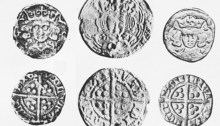
O'Reilly Money - Edward III, pre-Treaty issues, London mint, ex Grainger coll., wts. 29.6, 29.1 and 28.8 grains

O’Brien Rare Coin Review: O’Reilly’s Money (1447-1459)

Introduction: The much debated O’Reilly’s Money is often quoted in old Irish numismatic books and society papers. However, examples are very rare and few collectors seemed interested enough in them to add them to their cabinets in the early days of Irish numismatics. Most examples are hidden away in museum collections and rarely see the…

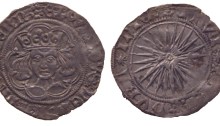
Edward IV 1467 Irish double groat, sun & roses coinage, Dublin mint

Edward IV issues Irish coins of a lower standard (1467)

Introduction: Realising that having an Irish currency equal to English standard weights resulted in a massive drain of silver out of Ireland and, consequently, reducing the amount of coinage in circulation + causing a recession, Edward IV moved towards remedying this by announcing a new (lower intrinsic value) coinage for Ireland in 1467: double-groats (eight…

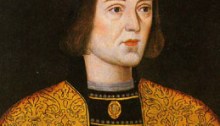
Edward IV issues Irish coins of the English standard (1463)

Introduction: Edward IV was the King of England from 4 March 1461 until 3 October 1470, and again from 11 April 1471 until his death in 1483. He was the first Yorkist King of England and most of the Irish Norman families (most notably, the Fitzgeralds of Desmond and Kildare) seem to have supported him, despite the Lancastrian…

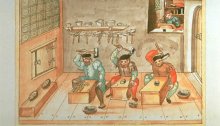
How hammered coins were made in medieval times (a video blog)

One of the most asked questions relating to hammered coins is “how are they made?” Rather than go into a long speech about how it was done, perhaps it is best if I leave this to the experts …. Dave Greenhalgh (Cosmeston Medieval Village) & Barrie Cook (Curator of Medieval Coins, British Museum) Dave reckons…

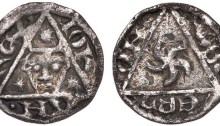
King John Irish farthing, Dublin mint

Collecting medieval Irish coins

One of the more difficult aspects of coin collecting is the language barrier one encounters when trying to decipher the legends (text around the edges) of coins. Very few of us speak Latin and truncated Latin still appears on British coins today. As we all know, British coins circulated alongside Irish coins in this country…