Duke of Ormonde’s gold coinage of 1646-7, Pistole, Dublin, undated, stamped 4dwt 7grs both sides

O’Brien Coin Guide: Introduction to the Emergency Coinages of the Great Rebellion of 1641-52

Introduction Many people think of the Great Rebellion as a two-sided fight – the Irish Catholics versus the Anglo-Irish Protestants … but it was a lot more complicated than that. There were at least five opposing parties during the rebellion, which have been described by Carlyle as follows :- the Catholics of the Pale demanding…

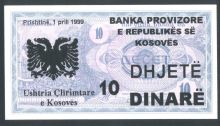
1999 Kosovo 10 dinare provisional issue (overprinted: UCK - Ushtria Clirimtare e Kosoves / Kosovo Liberation Army)

O’Brien Obsolete Currency Guide: Kosovo

Kosovo is a fertile region lying just to the northeast of Albania, in central former Yugoslavia. It is one of the earliest settlements by the Slavic people who later became the Serb nation – one of the reasons the hard-line nationalists in Serbia were so determined to include it as part of a Greater Serbia during…

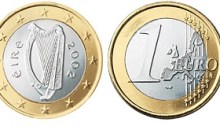
2002 Ireland €1, Type I reverse

O’Brien Coin Guide: Irish €1 Coins

The one euro coin (€1) is the new basic unit of currency for the Euro Zone – an area where a common currency (the Euro) is used.  This new economic area was implemented on 1st January 2002 when 12 national currencies of varying values were replaced with new coinage and banknotes.  The rates of exchange were…

Gold Lunula (2010:246) and Gold Discs (2010:247, 2010:248), Coggalbeg, Co. Roscommon. In 1947, for reasons still uncertain, Hubert Lannon handed these golden objects over to Mr Patrick Sheenan, a pharmacist in the town of Strokestown, Co. Roscommon. It appears that neither man fully appreciated the value of the artefacts and the National Museum of Ireland was not notified of their existence. Instead, Mr. Sheenan placed the artefacts in his family safe where they were to remain hidden for the next 50 years, only occasionally being brought out and shown to curious visitors.

Irish Metal Detectorists: Saints or Sinners?

At present, in Ireland, it is illegal to use a metal detector without a license and these licenses are very difficult to obtain + very restrictive in terms of where one can use a metal detector.  At face value, it is a common sense law designed to protect Ireland’s rich archaeological heritage from vandals, looters…