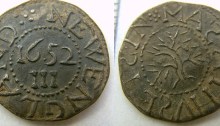
1652 Massachussets "oak tree" silver threepence

How NOT to sell “the gem” in your coin collection … an example of a ‘numismatic’ marketing faux pas !

It is every metal detector’s dream to find something worth a million, although most of them do it for the exercise, the fresh air and the fun they have in researching their smaller finds. Its about the history. I was very surprised and impressed to discover that most detectorists donate their finds to local museums…

William & Mary, halfpenny, 1692, (S6597) Edge flaw, good very fine and scarce

O’Brien Coin Guide: Irish ‘Regal Halfpennies’ of William & Mary

In 1660, the crown prince (later James II) married Anne Hyde, daughter of Charles II’s chief minister and they had two surviving children, Mary and Anne (both raised as Protestants) but in 1669, Prince James converted to Catholicism and took a stand against a number of anti-Catholic moves, including the Test Act of 1673. This…

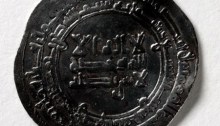
A coin minted in 921 or 922 for Nasr II ben Ahmad, an Arabic ruler (913-43), found in a hacksilver hoard buried at Storr Rock in Skye, Scotland

O’Brien Coin Guide: An Introduction to Medieval Islamic coins found in Ireland

Introduction Arabic, or Islamic, coins are frequently mentioned in the archaeological literature of the 19th and 20th centuries but there are few accounts that discuss these beautiful coins as a group – which probably reflects our preoccupation for coins with Latin inscriptions. They are found at many dig sites and their ‘deposition dates’ show a…

Cork, under Commonwealth authority, Farthing token, overstruck on a Double Tournois of Louis XIII

The Proliferation of Unofficial Irish ‘Farthing Tokens’ in the 17th Century

By the first half of the 17th C, the copper coinage in both Britain and Ireland was in complete disarray. Neither James I nor his son, Charles I, took much interest in providing small denominations and ‘farmed out’ the Royal prerogative of minting copper coins to ‘favourite’ courtiers as patentees – Lords Harington, Richmond, Lennox and Maltravers were the principal…

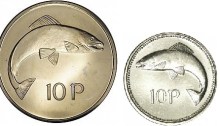
Ireland decimal 5p - large and small types

O’Brien Coin Guide: Irish Decimal Fivepence

The five pence (5p) coin (Irish: cúig phingin) was a sub-division of the Irish pound. It was introduced in Ireland on Decimal Day, 15th February 1971 and re-used the design on the shilling coin first produced for the Irish Free State in 1928.  Due to the similarity in size and weight, many of the old shillings…