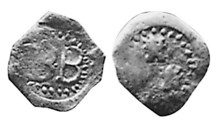
1647 Bandon farthing - Obverse BB in circle, Reverse 3 castles, 1 above 2 in circle

O’Brien Rare Coin Review: Coinage of the Cities of Refuge (Bandon 1646-49)

Bandon in 1641 The rural counties of Leinster, Munster and Ulster were sparsely populated by Protestant settlers that had been given land in recent plantations. In many places, the Catholic tenants that had previously worked the farms were still in the locality and subsisted as landless outlaws (woodkerne, or tories). When rebellion broke out, some…

Charles I (1625-1649), Confederate Catholics, ‘Rebel Money’, Crown, mm. pellet

O’Brien Rare Coin Review: Confederate Catholic Coinage of 1642-43 (Kilkenny/Rebel Money)

Introduction In the older literature, these coins are referred to as ‘Kilkenny Money’ but are now, more properly referred to as ‘Confederated Catholic Coinage’ or ‘Rebel Money.’ There are two opinions re who actually these enigmatic coins – one thinks they might have been minted by the Catholic Confederacy in Kilkenny from as early as September 1642…

Arrival of the English Flagship Royal Charles, painting by Jeronymus van Diest II from the Rijksmuseum Amsterdam (note the Dutch flag at the rear and English flag flying upside down from the main mast)

Financial Crisis (1667) avoided by Charles II, via London Goldsmiths’ Loans

Background After a brief hiatus of experimentation with a pseudo-republican government under Oliver Cromwell, the English monarchy was reinstated in 1660 but Charles II began his reign with vastly reduced powers, especially in the realm of taxation – responsibility for which had been transferred to Parliament. This was a major restriction on Charles II and…

Charles II, King of England, Scotland and Ireland, by John Riley

Banking Collapse in London (1676) as Charles II Defaults on Royal Loans

Background The Great Stop of 1672 caused five of the leading London Goldsmiths to go bust, drastically affected nine others, and ‘financially embarrassed over 10,000 wealthy families in England. The Great Stop effectively ended the ‘cosy relationship’ between the king and a small clique of private bankers that thrived on the Crown’s inability to generate…

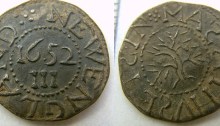
1652 Massachussets "oak tree" silver threepence

How NOT to sell “the gem” in your coin collection … an example of a ‘numismatic’ marketing faux pas !

It is every metal detector’s dream to find something worth a million, although most of them do it for the exercise, the fresh air and the fun they have in researching their smaller finds. Its about the history. I was very surprised and impressed to discover that most detectorists donate their finds to local museums…

James II, King of England, Scotland & Ireland

Monetary Crisis (1689), as James II Fixes Exchange Rates for Foreign Coins in Ireland

Introduction When James II succeeded his father in 1685, he continued to issue copper halfpennies, albeit via a ‘patent’ like his father did before him. This maintained the flow of small change but the same ‘decades old’ problem persisted with the large proportion of under-weight ‘clipped’ silver in circulation. This might have sufficed for transactions…