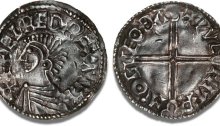
Aethelred II, Type 5 - Long Cross penny, Moneyer, Wulfmær of Castle Gotha

O’Brien Coin Guide: Anglo-Saxon Coins & Their Links To Ireland

It may come as a bit of a surprise to many that although Celtic coins have not (yet) been discovered in Ireland, there have been a lot of Roman and Anglo-Saxon coins found – especially the latter.  Conservative Irish historians have always said the Romans never got here but they rarely even mention the Anglo-Saxons…

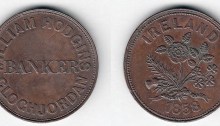
O’Brien Coin Guide: The Unofficial Irish Token Coinages of George III (1760-1820)

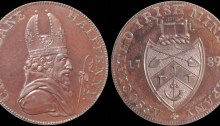
Introduction The late 18th century is a complicated time from the perspective of collecting tokens insofar as several dealers began to manufacture their own tokens for collectors, i.e. these did not circulate. They doubled and tripled their profits by deliberately producing mules, i.e. mis-matching obverse and reverse dies. They then increased their profits further by…

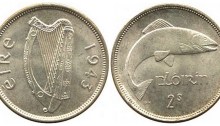
coins, numismatics, irish free state, eire, ireland, florin, two-shillings, The rare 1943 Ireland florin - approx. known examples exist.

O’Brien Rare Coin Review: Why is the 1943 Irish Florin so valuable?

Introduction The 1943 florin is the rarest ‘modern’ Irish coin to have actually circulated. The 1985 Irish 20p was not intended to circulate The 1992 Irish 10p was not intended to circulate Both of the coins listed above were minted for only testing purposes, i.e. to calibrate vending machines and they were supposed to have…

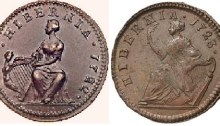
Wood's Irish coinage, Ireland, Dean Swift, Numismatic, coin, farthing, halfpenny

O’Brien Coin Guide: William Wood’s Irish Coinage (1722-1724) for George I

William Wood was the owner of several copper and tin mines in England and he hoped to make a large profit via the production of coins for use in Ireland and America.  During the first half of 1722 King George I’s mistress (who had followed him over from Germany), the Duchess of Kendal, obtained a…

How to identify the Irish chickless penny variety ireland coins coinage

O’Brien Coin Guide: How to identify the Irish “Chickless” Penny Variety

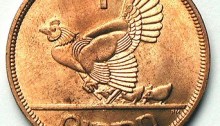
The ‘chickless’ variety is probably a die flaw caused by normal ‘wear and tear’ on the dies during the minting process.  This variety has become very popular with collectors over the past decade and some claim to have evidence of “progressive wear across several examples of 1968 pennies” leading to a chickless coin. The most…

1961 Ireland Halfcrown - the differences between the normal and mule reverse

O’Brien Coin Guide: How to identify the Irish 1961 Halfcrown ‘Mule’ variety

The 1961 ‘mule’ halfcrown was struck in error (or, possibly deliberately) from a reverse die from the 1928-37 type.  In 1938 the halfcrown reverse – the side with the horse on it – had been redesigned to improve the striking characteristics of the coin.  A single example of the 1938 trial of the new die…