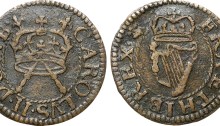
The Irish Armstrong farthing legend reads as follows :- CAROLVS II D G M B FRA ET HIB REX which translates and expands to :- Charles II by the grace of God, King of Great Britain, France and Ireland

O’Brien Coin Guide: Armstrong’s ‘Patent’ Irish Farthings (1660-61) for Charles II

Upon his restoration to the crown in 1660, King Charles II granted a patent to Sir Thomas Armstrong to ‘coin farthings’ for the next twenty years and all other (unofficial) farthings were to be prohibited.   In 1661, two royal proclamations were issued prohibiting the issuing and use of brass or copper tokens In 1662,…

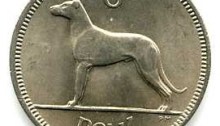
Ireland Irish coin sixpence reverse

O’Brien Coin Guide: Irish Pre-Decimal Sixpence

The sixpence (6d) (Irish: reul) coin was a sub-division of the pre-decimal Irish pound, worth 1/40 of a pound or ½ of a shilling.  It ‘nickname’ was a ‘tanner’ and it is thought that this is from John Sigismund Tanner, originally from Saxe-Coburg, who was a medallist and designer at the Royal Mint.  The sixpence he designed for George II…

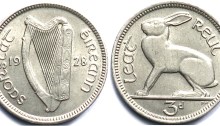
Ireland 1928 threepence coin ireland saorstat eireann eire percy metcalfe

O’Brien Coin Guide: Irish Pre-Decimal Threepence

The threepence (3d) (Irish: leath reul) coin was an Irish pre-decimal coin and a great favourite of golfers who often used it as a green marker.  There were 4 threepences to a shilling and 80 to an old pound.  The Irish name (leath reul) literally meant “half a sixpence” and, unlike many other Irish coins of the time, it…

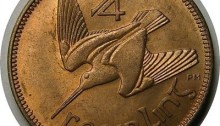
1928-66 Irish Farthing (reverse design)

O’Brien Coin Guide: Irish Pre-Decimal Farthing

Ireland is one of only four nations to issue farthing coins in the 20th century.  The other three countries to circulate farthings were the UK (1900-1956), South Africa (1923-60), and Jamaica (1900-63). British farthings ceased to be legal currency in 1960 The farthings of South Africa, Jamaica and Ireland ceased to be legal currency in 1961, 1969…

O’Brien Coin Guide: Roman Emperors and their Coins, Part IV

The Year of the Five Emperors (AD 192 – 193) Pertinax The ‘Year of the Five Emperors’ refers to the year AD 193, in which there were five claimants for the title of Roman Emperor – Pertinax, Didius Julianus, Pescennius Niger, Clodius Albinus and Septimius Severus. The year opened with news of the murder of Commodus…

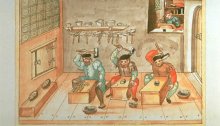
How hammered coins were made in medieval times (a video blog)

One of the most asked questions relating to hammered coins is “how are they made?” Rather than go into a long speech about how it was done, perhaps it is best if I leave this to the experts …. Dave Greenhalgh (Cosmeston Medieval Village) & Barrie Cook (Curator of Medieval Coins, British Museum) Dave reckons…

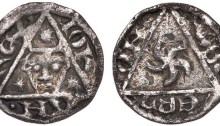
King John Irish farthing, Dublin mint

Collecting medieval Irish coins

One of the more difficult aspects of coin collecting is the language barrier one encounters when trying to decipher the legends (text around the edges) of coins. Very few of us speak Latin and truncated Latin still appears on British coins today. As we all know, British coins circulated alongside Irish coins in this country…