The Enigmatic Coins of the Celtic Tribes of Britain

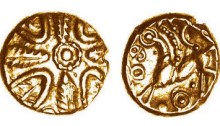
Celtic coinage is the most intriguing and varied of all the British coins since no one knows specifically for whom, when or where they were produced.  To date, over 45,000 of ancient British and Gaulish coins have been discovered in Britain and all of these have been recorded at the Oxford Celtic Coin Index, but…

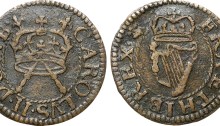
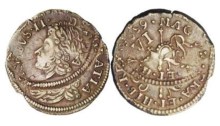
The Irish Armstrong farthing legend reads as follows :- CAROLVS II D G M B FRA ET HIB REX which translates and expands to :- Charles II by the grace of God, King of Great Britain, France and Ireland

O’Brien Coin Guide: Armstrong’s ‘Patent’ Irish Farthings (1660-61) for Charles II

Upon his restoration to the crown in 1660, King Charles II granted a patent to Sir Thomas Armstrong to ‘coin farthings’ for the next twenty years and all other (unofficial) farthings were to be prohibited.   In 1661, two royal proclamations were issued prohibiting the issuing and use of brass or copper tokens In 1662,…

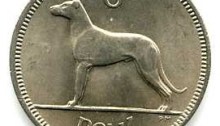
Ireland Irish coin sixpence reverse

O’Brien Coin Guide: Irish Pre-Decimal Sixpence

The sixpence (6d) (Irish: reul) coin was a sub-division of the pre-decimal Irish pound, worth 1/40 of a pound or ½ of a shilling.  It ‘nickname’ was a ‘tanner’ and it is thought that this is from John Sigismund Tanner, originally from Saxe-Coburg, who was a medallist and designer at the Royal Mint.  The sixpence he designed for George II…

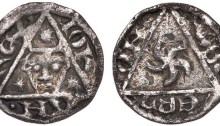
King John Irish farthing, Dublin mint

Collecting medieval Irish coins

One of the more difficult aspects of coin collecting is the language barrier one encounters when trying to decipher the legends (text around the edges) of coins. Very few of us speak Latin and truncated Latin still appears on British coins today. As we all know, British coins circulated alongside Irish coins in this country…