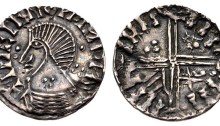
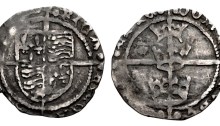
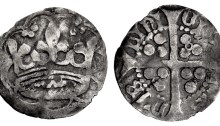
Hiberno-Norse Silver Penny, Phase IV (Scratched Die), Type 3 – Bust left. Long Cross, with quatrefoil and hand symbol. The Old Currency Exchange, Dublin, Ireland.

Irish Coin Daily: Hiberno-Norse Silver Penny, Phase IV (Scratched Die), Class A, Type 3 – Bust left. Long Cross, with quatrefoil and hand symbol.

Date: c. 1060-65 Description: An Hiberno-Norse Silver Penny, Phase IV (Scratched Die), Class A, Type 3 – Bust left. Long Cross, with quatrefoil and hand symbol. Uncertain mint signature and moneyer. References: S.6134 Extremely Fine (EF) Attractive grey tones. Rare. Obverse: Draped bust left. Badly blundered legend, illegible. Reverse: Long cross, with triple crescent ends;…
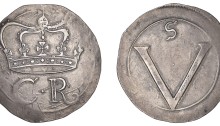
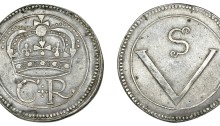
Ormonde Money, Crown, lozenge stop (between 2 small pellets) between C and R, small, serifed S on reverse, 29.59g (S 6544, DF 288, KM. 64). The Old Currency Exchange, Dublin, Ireland.

Irish Coin Daily: Ormonde Money, Crown, lozenge stop (between 2 small pellets) between C and R, small, serifed S on reverse

Date: 1643-44 Description: Ormonde Money, Weight: 29.59 g References: S 6544; DF 288; KM. 64. Well-struck, with some obverse die breaks. Good very fine (gVF) Toned. Obverse: Crowned C·R (for Charles Rex) within a double circle Lozenge stop (between 2 small pellets) between C and R Reverse: Roman numeral V (denoting 5 Shillings) within a…

Ormonde Money, Crown, lozenge stop (within quatrefoil) between C and R, stylised S on reverse, 29.13g (S 6544, DF 291). The Old Currency Exchange, Dublin, Ireland.

Irish Coin Daily: Ormonde Money, Crown, lozenge stop (within quatrefoil) between C and R, large, stylised S on reverse

Date: 1643-44 Description: Ormonde Money, Crown. Weight: 29.13 g References: S 6544; DF 291. Well-struck on a full flan Very Fine (VF) Rare Obverse: Crowned C·R (for Charles Rex) within a double circle Lozenge within a quatrefoil separating the C and R Reverse: Roman numeral V (denoting 5 Shillings) within a double circle Stylised ‘S’…

Ormonde Money, Shilling, 5.40g (S 6546, DF 297, KM. 60). The Old Currency Exchange, Dublin, Ireland.

Irish Coin Daily: Ormonde Money, Shilling, Pellet between CR + small pellet after; tall numerals, small ‘D’

Date: 1643-44 Description: Ormonde Money, Shilling. Weight: 5.40 g References: S 6546; DF 297; KM. 60. Die break on crown, otherwise about very fine and well-struck for issue Almost Very Fine (aVF) Toned. Obverse: Crowned C·R· (for Charles Rex) within a double circle Reverse: Roman numeral XII (denoting 12 pence) within a double circle D…

Ormonde Money, Crown, lozenge stop between c-r, 29.59g (S 6544, DF 288, KM. 64). The Old Currency Exchange, Dublin, Ireland.

Irish Coin Daily: Ormonde Money, Crown, lozenge stop between C and R

Date: 1643-44 Description: Ormonde Money, Crown, lozenge stop between C and R. Diameter: Irregular flan Weight: 29.59 g Some obverse die breaks, toned. Good Very Fine (gVF) References: S 6544; DF 288; KM. 64 Country: Ireland Category: Anglo-Norman House of Stuart Charles I Ormonde Money Also known as: Coins of Necessity Siege Money Hammered  …

Ormonde Money, Crown, no stop between c-r, 28.17g/12h (cf. S 6544; cf. DF 288; cf. KM. 64). The Old Currency Exchange, Dublin, Ireland.

Irish Coin Daily: Ormonde Money, Crown, no stop between C and R (A 19th C copy ?)

Date: 1643-44 Description: Ormonde Money, Crown, no stop between C and R. Probably a later copy and likely made in the early 19th century. Weight: 28.17g References: cf. S 6544; cf. DF 288; cf. KM. 64. Well-struck on a full flan Good very fine (gVF) Toned. Obverse: Crowned C·R (for Charles Rex) within a double…

Ormonde Money, Halfcrown, small triangle between c-r, tall figures on rev., 15.10g/2h (Bull 7 [A8]; S 6545; DF 293; KM. 61). Die breaks on crown, very fine or better for issue, toned, rare. The Old Currency Exchange, Dublin, Ireland.

Irish Coin Daily: Ormonde Money, Halfcrown, small triangle between C·R, tall figures on rev.

Date: 1643-44 Description: Ormonde Money, Halfcrown, small triangle between CR. Weight: 15.10g Die breaks on crown, very fine (VF) or better for issue Toned. Rare. References: (Bull 7 [A8]; S 6545; DF 293; KM. 61) Obverse: Crowned C·R (for Charles Rex) within a double circle Variety: Small triangle (instead of dot) between CR Reverse: IIs…

Hiberno-Norse Penny, Phase IV (scratched die) Type 2 – Bust left, two pellets in front, trefoil on neck, pellet + quatrefoil behind. The old Currency Exchange, Dublin, Ireland.

Irish Coin Daily: Hiberno-Norse Silver Penny, Phase IV (Scratched Die), Class A, Type 2 – Bust left, two pellets in front, trefoil on neck, pellet + quatrefoil behind.

Date: c. 1060-65 Description: An Hiberno-Norse silver penny. Phase IV, Long Cross type. Uncertain mint signature and moneyer. Diameter: 18 mm Weight: 1.01 g References: Cf. Blackburn 4, Fig. 6, 6 (for type) O’S –; cf. SCBI 8 (BM), 147 (same); SCBI 32 (Belfast), 313; D&F 25; SCBC 6134 Good Very Fine (gVF) Toned, slightly…

Richard III, Three Crowns coinage (First issue, 1483-1485) Silver Groat (Dublin mint). The Old Currency Exchange, Dublin, Ireland.

Irish Coin Daily: Richard III, Second Issue – ‘Three Crowns’ coinage (1483-1485) Silver Groat (Dublin mint)

Date: c. 1483-85 Description: Richard III (1483-1485) Silver Groat – Second Issue – ‘Three Crowns’ coinage. Dublin mint. Struck 1483-1485. This coin is the second type of Richard III and is interpreted as an implementation of Edward IV’s final coinage act of 1483. Diameter: 22 mm Weight: 1.73 g Near Very Fine (nVF). Toned. Very…

Edward IV. First reign, Anonymous 'Crown' coinage. Penny (16mm, 0.54 g). Dublin mint, c. 1460-1463. Crown within tressure of nine arches. The Old Currency Exchange, Dublin, Ireland.

Irish Coin Daily: Edward IV. First reign, Anonymous ‘Crown’ coinage. Penny (Dublin mint) Crown within tressure of nine arches

Date: c. 1460-1463 Description: Edward IV (First reign, 1461-1470) silver penny. Anonymous ‘Crown’ coinage. Dublin mint. Struck circa 1460-1463. Diameter: 16mm Weight: 0.54 g Good Fine (gF). Lightly creased. Extremely rare Only one Penny of the ‘Anonymous Crown’ coinage has been sold at auction in the past 20 years. This is the second example to…