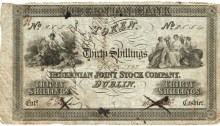
1827 Hibernian Bank Thirty Shillings Token, 1 February 1827. No. 3554. Countersigned front and back, cancelled with ink 'x' over clerk and cashier's signatures, rare. The Old Currency Exchange, Dublin, Ireland.

Irish Banknote Guide: 1827 Hibernian Bank – Thirty Shillings Token, Type 1

Date: 1827 Description: 1827 Hibernian Bank Thirty Shillings Token, Type 1 (no ‘promissory’ text). Manually dated ‘1 February 1827’ and numbered ‘3554’. Countersigned front and back Cancelled with ink ‘x’ over clerk and cashier’s signatures A rare early paper note Obverse: Design comprises two vignettes, one to the left of Hibernia seated with a harp…
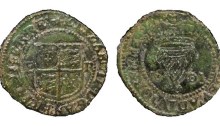
1601 Elizabeth I, Copper Penny (3rd Irish Coinage), Irish Coin Database, The Old Currency Exchange

Irish Coin Daily: Elizabeth I, Copper Penny (3rd Irish Coinage) mm. Star

Date: 1601-02 Description: Country: Ireland Category: Anglo-Irish House of Tudor Elizabeth I Third Irish Coinage (debased silver & copper pennies/halfpennies) Tower of London Mint Hammered   Notes: The coins are known as Irish pennies. The English minted them in 1601 and 1602 and tried to introduce them as currency in Ireland, however the Irish rejected…

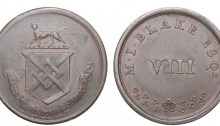
Galway, Ballyglunin Estate (M I Blake) 8d truck token

O’Brien Coin Guide: Truck/Scrip Tokens of Ballyglunin Estate, Co Galway

Introduction: Perhaps one of the most dispicable practises of the so-called landlord classes in Ireland (and elsewhere) was the ‘truck’ system whereby employees were sometimes partly paid in ‘Truck’ Tokens, spendable only in the issuer’s own shops, where prices were generally higher than elsewhere. The word truck is derived from the French troquer, meaning to “exchange” or “barter”…

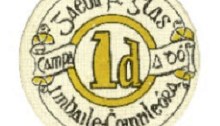
Ballykinlar Internment Camp - one penny token

O’Brien Coin Guide: Ballykinlar Internment Camp Tokens (1920-21)

Introduction These items are unusual insofar as they fall into several categories, i.e. coin tokens, unofficial notes. Either way, they are ‘para-numismatic’ items and are also collected by those interested in militaria, republican memorabilia and banknotes. They were produced for use in the Ballykinlar Internment Camp in Co Down towards the end of the Irish…

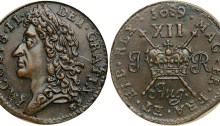
Cork, under Commonwealth authority, Farthing token, overstruck on a Double Tournois of Louis XIII

The Proliferation of Unofficial Irish ‘Farthing Tokens’ in the 17th Century

By the first half of the 17th C, the copper coinage in both Britain and Ireland was in complete disarray. Neither James I nor his son, Charles I, took much interest in providing small denominations and ‘farmed out’ the Royal prerogative of minting copper coins to ‘favourite’ courtiers as patentees – Lords Harington, Richmond, Lennox and Maltravers were the principal…

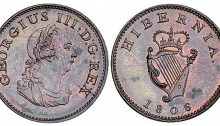
O’Brien Coin Guide: The Unofficial Irish Token Coinages of George III (1760-1820)

Introduction The late 18th century is a complicated time from the perspective of collecting tokens insofar as several dealers began to manufacture their own tokens for collectors, i.e. these did not circulate. They doubled and tripled their profits by deliberately producing mules, i.e. mis-matching obverse and reverse dies. They then increased their profits further by…