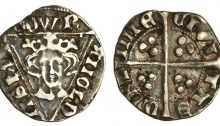
Edward I, fourth Irish coinage, Penny, Intermediate Issue, Dublin, type II, 1.40g, EDWR ANGLD NSHYB, rosette on breast, rev. CIVI TAS DVBL INIE, small letters, irregular,possibly clipped, good fine (S.6257) very rare. The Old Currency Exchange, Dublin, Ireland.

Irish Coin Daily: Silver Penny of Edward I, 4th Coinage (Dublin Mint) Type II, Intermediate Issue

Date: c. 1294 Edward I, Fourth Irish Coinage, Silver Penny, Intermediate Issue, Dublin Mint, type II. Irregular flan, possibly clipped, otherwise good fine (gF) Weight: 1.40g Ref: S.6257 Very rare Obverse: Crowned bust in triangle, rosette on breast (instead of the usual trefoil) Legend: EDWR ANGLD NSHYB Reverse: Cross & Pellets design (no moneyer’s name),…
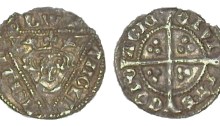
Edward I (1272-1307), Fifth Irish coinage, Silver Halfpenny, Cork Mint. Obv legend EDWR ANGLD NSHYB. Rev legend CIVI TAS CORC ACIE. The Old Currency Exchange, Dublin, Ireland.

Irish Coin Daily: Silver Halfpenny of Edward I, 5th Coinage (Cork Mint)

Date: 1297-1302 Description: A rare Silver Half Penny of Cork in the name of Edward I. This piece is an example of his fifth coinage and was minted in Cork between the years 1297 and 1302. Edward’s mint in Cork closed in 1302. A well-struck example, showing well-defined legends (lettering) and portrait. Traces of silver…

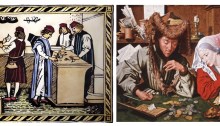
Medieval banking had to overcome the dangers of the Usury Laws and the Italians did so by organising themselves into merchant banking societies, rather than acting as individual traders.

The Great Monetary Crisis of 13th C Europe and its effect on the Norman Colony in Ireland

Introduction: Medieval history is often taught as a power struggle between nobles fighting for control of their inherited lands via a series of military campaigns, often ending in a decisive battle that has been portrayed within a 19th century ‘nationalist’ mindset. My own education, from what I can remember of primary school and the old…

1818 Kilkenny Bank, Five Pounds Sterling, dated 11 November 1818, for James Loughnan, signed by him. The Old Currency Exchange, Dublin, Ireland.

Early Irish Banknotes: Five Pounds Stg., The Kilkenny Bank (Loughnan’s Bank) 1818

The Kilkenny Bank / Loughnan’s Bank: The Kilkenny Bank was first registered in 23rd September 1800, by Connel Loughnan and John Helsham. There was three sets of notes issued: Type 1 Signatories: Kilkenny Bank (Connel Loughnan and John Helsham) Type 2 Signatories: Kilkenny Bank (Michael Brennan and James Loughnan) Type 3 Signatories: Kilkenny Bank (James…

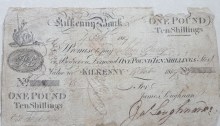
One Pound & Ten Shillings, Kilkenny Bank (Loughnan's Bank) 1819, signed by James Loughnan. The Old Currency Exchange, Dublin, Ireland.

Early Irish Banknotes: One Pound & Ten Shillings Stg., The Kilkenny Bank (Loughnan’s Bank) 1819

The Kilkenny Bank / Loughnan’s Bank: The Kilkenny Bank was first registered in 23rd September 1800, by Connel Loughnan and John Helsham. There was three sets of notes issued: Type 1 Signatories: Kilkenny Bank (Connel Loughnan and John Helsham) Type 2 Signatories: Kilkenny Bank (Michael Brennan and James Loughnan) Type 3 Signatories: Kilkenny Bank (James…

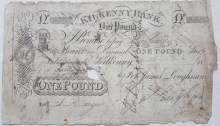
One Pound Sterling, The Kilkenny Bank (Loughnan's Bank), signed by James Loughnan. The Old Currency Exchange, Dublin, Ireland

Early Irish Banknotes: One Pound Stg., The Kilkenny Bank (Loughnan’s Bank)

The Kilkenny Bank / Loughnan’s Bank: The Kilkenny Bank was first registered in 23rd September 1800, by Connel Loughnan and John Helsham. There was three sets of notes issued: Type 1 Signatories: Kilkenny Bank (Connel Loughnan and John Helsham) Type 2 Signatories: Kilkenny Bank (Michael Brennan and James Loughnan) Type 3 Signatories: Kilkenny Bank (James…

1818 Kilkenny Bank, Five Pounds Sterling, dated 11 November 1818, for James Loughnan, signed by him. The Old Currency Exchange, Dublin, Ireland.

O’Brien Banknote Guide: The Kilkenny Bank / Loughnan’s Bank 1800-1820

Introduction: Loughnan’s Bank was first registered on 23rd September 1800, by Connel Loughnan and John Helsham, who became Lord Mayor of Kilkenny in 1804. It opened shortly after the Williams & Finn Bank established itself in Kilkenny City. John Helsham was the fourth member of his family to become Lord Mayor of Kikenny, following 1679…

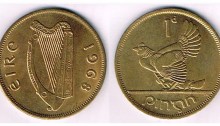
1968 Irish penny flan error E16i - struck in nickel-brass instead of bronze, with a copy of a letter, dated 3rd April 1975, from Royal Mint confirming it was an error. Very rare, uncirculated.

O’Brien Coin Guide: Irish Pre-Decimal Penny Errors & Varieties

Introduction: This post is a continuation of the research work done by Derek Young and Prof. G.F. Mitchell – first published in the Irish Numismatics magazine. Sadly, this excellent magazine is no longer available and quite difficult to source. The information in this post relates to ‘minting errors’ on Irish pre-decimal pennies. According to a…

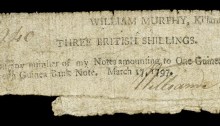
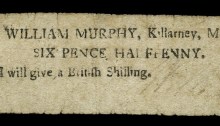
1797 Killarney, William Murphy, Sixpence ha'penny, 7 March 1797, signed by William Murphy. The Old Currency Exchange, Dublin, Ireland.

Early Irish Banknotes: Killarney, William Murphy (Sixpence ha’penny) 1797

The Killarney Bank: This ‘bank’ does not appear to have ever been registered and, if the stories about are anything to go by, its lack of official registration is easily explained. The bank was run by one William Murphy – a saddler in the town of Killarney – and his notes were used as small…