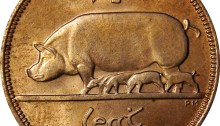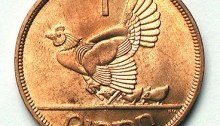
O’Brien Coin Price Guide: Irish Pre-Decimal Halfpenny

2018 Market Values Irish Free State (Saorstát Éireann) US Grades G VF 20 XF40 AU50 MS61RB YEAR Mintage Good Fine Very Fine Ex. Fine Uncirculated 1928 2,880,000 face €1.00 €2.00 €5.00 €15.00 6,001 proofs €35.00 re-strike €60.00 1933 720,000 face €3.50 €18.00 €75.00 €200.00 1935 960,000 face €2.00 €8.00 €50.00 €150.00 1937 960,000 face €1.25…

O’Brien Coin Price Guide: Irish Pre-Decimal Farthing

2018 Market Values Irish Free State (Saorstát Éireann) YEAR   VF 20 XF40 AU50 MS61 RB PF66 R Mintage Fine Very Fine Ex. Fine Uncirculated Proof (FDC) 1928 300,000 €2.25 €4.00 €7.00 €14.00 €30.00 1930 288,000 €3.50 €6.00 €15.00 €25.00 1931 192,000 €4.00 €7.50 €20.00 €35.00 €500.00 1932 192,000 €4.00 €8.00 €20.00 €35.00 1933 480,000…

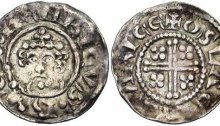
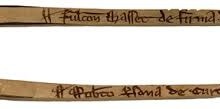
Henry II of England, Short Cross Class 1B Penny, Moneyer Oslac of Worcester

O’Brien Coin Guide: Why did Henry II not issue coins for Ireland?

Background Henry’s Troubled Succession Henry was born in France at Le Mans on 5 March 1133 as the eldest child of Geoffrey the Fair, Count of Anjou, and the Empress Matilda, so titled because of her first marriage to Henry V, the Holy Roman Emperor. Henry’s mother was a very powerful woman: She was the…

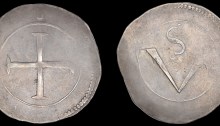
Charles I (1625-1649), Confederate Catholics, ‘Rebel Money’, Crown, mm. pellet

O’Brien Rare Coin Review: Confederate Catholic Coinage of 1642-43 (Kilkenny/Rebel Money)

Introduction In the older literature, these coins are referred to as ‘Kilkenny Money’ but are now, more properly referred to as ‘Confederated Catholic Coinage’ or ‘Rebel Money.’ There are two opinions re who actually these enigmatic coins – one thinks they might have been minted by the Catholic Confederacy in Kilkenny from as early as September 1642…

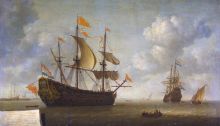
Arrival of the English Flagship Royal Charles, painting by Jeronymus van Diest II from the Rijksmuseum Amsterdam (note the Dutch flag at the rear and English flag flying upside down from the main mast)

Financial Crisis (1667) avoided by Charles II, via London Goldsmiths’ Loans

Background After a brief hiatus of experimentation with a pseudo-republican government under Oliver Cromwell, the English monarchy was reinstated in 1660 but Charles II began his reign with vastly reduced powers, especially in the realm of taxation – responsibility for which had been transferred to Parliament. This was a major restriction on Charles II and…

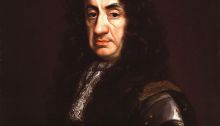
Charles II, King of England, Scotland and Ireland, by John Riley

Banking Collapse in London (1676) as Charles II Defaults on Royal Loans

Background The Great Stop of 1672 caused five of the leading London Goldsmiths to go bust, drastically affected nine others, and ‘financially embarrassed over 10,000 wealthy families in England. The Great Stop effectively ended the ‘cosy relationship’ between the king and a small clique of private bankers that thrived on the Crown’s inability to generate…

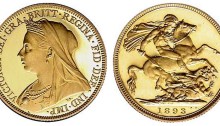
1893 Victoria widow head

O’Brien Coin Guide: Mintages for British Gold Sovereigns

The British gold sovereign is one of the most ‘collected’ gold coins in Ireland today. We used it when we were part of the UK and it would seem that we are still hoarding them. Named after the English gold sovereign, previously last minted in 1604, the name was revived with the Great Re-coinage of…