1833 30 shillings, Gibbons & Williams, Dublin S/N 25, dated 1st July 1833, signed by Hutchins Thomas Williams. The Old Currency Exchange, Dublin, Ireland.

Irish Banknote Guide: Thirty Shillings (Gibbons & Williams’ Bank) 1833

Gibbons & Williams Bank: Gibbons & Williams was one of the last private banks to be founded in Ireland. Founded in 1833, it spectacularly collapsed in 1835 when the senior partner, Hutchins Thomas Williams, was found to have been embezzling client funds. James Gibbons had parted company with him in 1834 and wasn’t involved in…

1833 £1 Gibbons & Williams, Dublin, S/N 378, dated 1st July 1833 and signed by H.T. Hutchins. The Old Currency Exchange, Dublin, Ireland.

Irish Banknote Guide: One Pound (Gibbons & Williams’ Bank) 1833

Gibbons & Williams Bank: Gibbons & Williams was one of the last private banks to be founded in Ireland. Founded in 1833, it spectacularly collapsed in 1835 when the senior partner, Hutchins Thomas Williams, was found to have been embezzling client funds. James Gibbons had parted company with him in 1833 and wasn’t involved in…

1818 Kilkenny Bank, Five Pounds Sterling, dated 11 November 1818, for James Loughnan, signed by him. The Old Currency Exchange, Dublin, Ireland.

Early Irish Banknotes: Five Pounds Stg., The Kilkenny Bank (Loughnan’s Bank) 1818

The Kilkenny Bank / Loughnan’s Bank: The Kilkenny Bank was first registered in 23rd September 1800, by Connel Loughnan and John Helsham. There was three sets of notes issued: Type 1 Signatories: Kilkenny Bank (Connel Loughnan and John Helsham) Type 2 Signatories: Kilkenny Bank (Michael Brennan and James Loughnan) Type 3 Signatories: Kilkenny Bank (James…

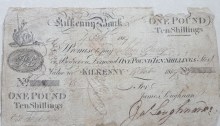
One Pound & Ten Shillings, Kilkenny Bank (Loughnan's Bank) 1819, signed by James Loughnan. The Old Currency Exchange, Dublin, Ireland.

Early Irish Banknotes: One Pound & Ten Shillings Stg., The Kilkenny Bank (Loughnan’s Bank) 1819

The Kilkenny Bank / Loughnan’s Bank: The Kilkenny Bank was first registered in 23rd September 1800, by Connel Loughnan and John Helsham. There was three sets of notes issued: Type 1 Signatories: Kilkenny Bank (Connel Loughnan and John Helsham) Type 2 Signatories: Kilkenny Bank (Michael Brennan and James Loughnan) Type 3 Signatories: Kilkenny Bank (James…

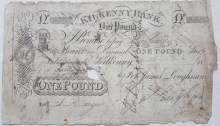
One Pound Sterling, The Kilkenny Bank (Loughnan's Bank), signed by James Loughnan. The Old Currency Exchange, Dublin, Ireland

Early Irish Banknotes: One Pound Stg., The Kilkenny Bank (Loughnan’s Bank)

The Kilkenny Bank / Loughnan’s Bank: The Kilkenny Bank was first registered in 23rd September 1800, by Connel Loughnan and John Helsham. There was three sets of notes issued: Type 1 Signatories: Kilkenny Bank (Connel Loughnan and John Helsham) Type 2 Signatories: Kilkenny Bank (Michael Brennan and James Loughnan) Type 3 Signatories: Kilkenny Bank (James…

1818 Kilkenny Bank, Five Pounds Sterling, dated 11 November 1818, for James Loughnan, signed by him. The Old Currency Exchange, Dublin, Ireland.

O’Brien Banknote Guide: The Kilkenny Bank / Loughnan’s Bank 1800-1820

Introduction: Loughnan’s Bank was first registered on 23rd September 1800, by Connel Loughnan and John Helsham, who became Lord Mayor of Kilkenny in 1804. It opened shortly after the Williams & Finn Bank established itself in Kilkenny City. John Helsham was the fourth member of his family to become Lord Mayor of Kikenny, following 1679…

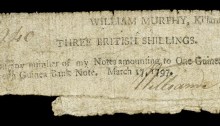
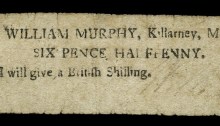
1797 Killarney, William Murphy, Sixpence ha'penny, 7 March 1797, signed by William Murphy. The Old Currency Exchange, Dublin, Ireland.

Early Irish Banknotes: Killarney, William Murphy (Sixpence ha’penny) 1797

The Killarney Bank: This ‘bank’ does not appear to have ever been registered and, if the stories about are anything to go by, its lack of official registration is easily explained. The bank was run by one William Murphy – a saddler in the town of Killarney – and his notes were used as small…

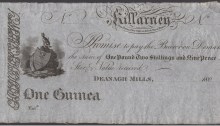
c. 1804 Deenagh Mills, Killarney, One Guinea (One pound, two shillings & ninepence)

Early Irish Banknotes: Killarney, Deanagh Mills (One Guinea) 180_ (un-issued)

Deanagh Mills Tradesman’s Note This establishment was never registered as a ‘bank’ per se and, as a result, its notes are listed as a Tradesman Issue in the Paper Money of Ireland catalogue. That said, their banknotes were produced to a high standard and the surviving banknotes (usually un-issued) are of good quality and usually…